// PRODUCT
Tags
Hang tags, retail tags, and durable tag substrates for apparel, food, and consumer products.
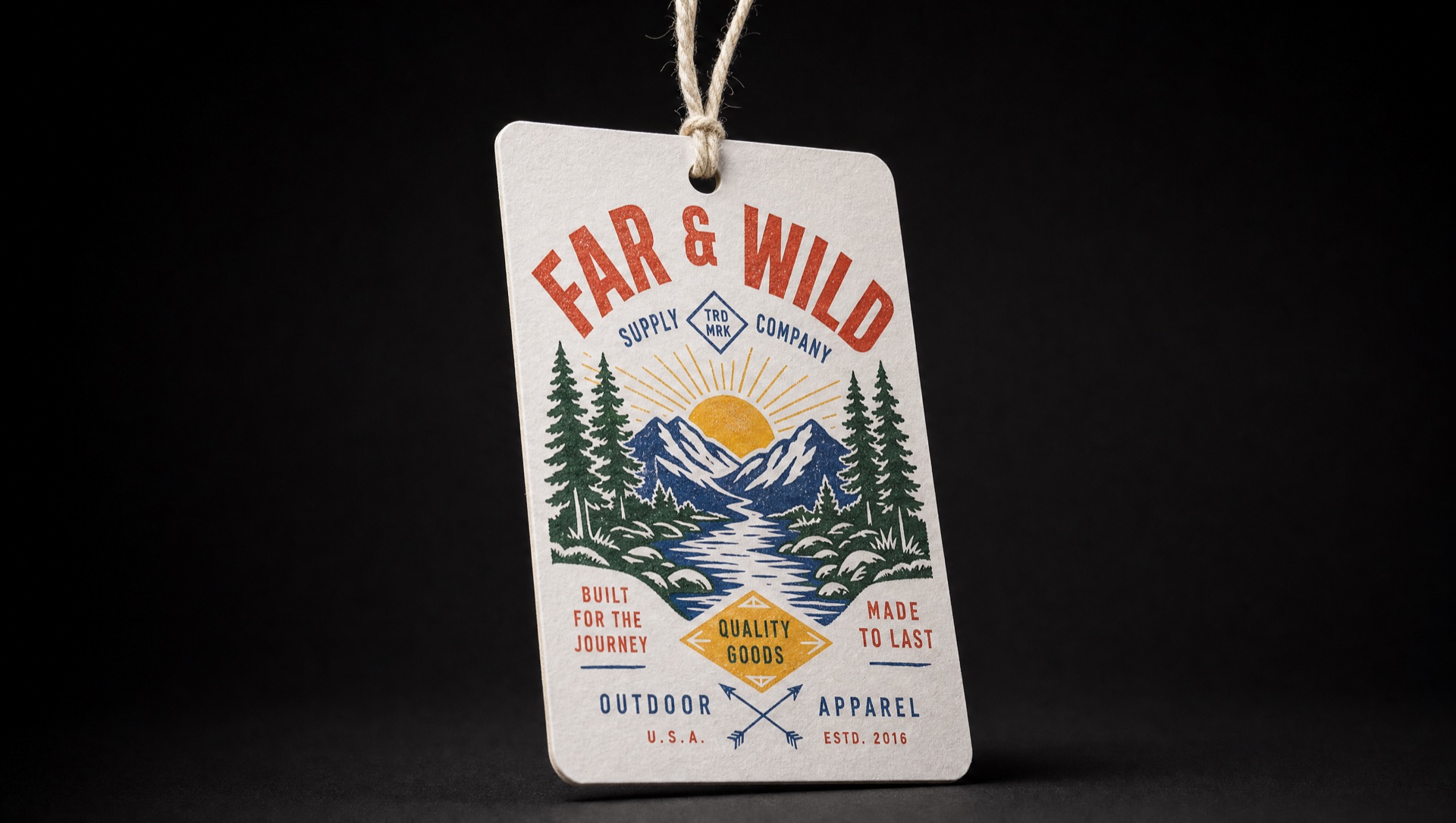
Tags carry the brand at the moment a customer makes the purchase decision. A buyer picks up the product, turns the tag, reads the story, feels the paper stock, and decides if your $48 candle is worth $48. The tag is a brand object — not an afterthought — and the substrate, finish, die-cut shape, and color rendering all signal what kind of brand you are. Tag printing also lives at a weird intersection: heavier stocks than standard labels, more print-and-finish complexity per unit, smaller run economics that don’t fit a flexo press but require digital quality that doesn’t trade off against the tactile feel. Most label vendors treat tags as a side line. We’ve built the program to treat them as a primary line.
What tags are good for
Hangtags for apparel, accessories, and soft goods — attached at the manufacturing or warehouse stage, displayed at retail, carrying brand story plus required regulatory content (RN number, fiber content, country of origin, care instructions). Swing tags for boutique food brands attached to bottle necks or jar lids, often with handwritten or printed batch-number callouts. Premium product tags for candles, cosmetics, soaps, and artisan goods where the tag does as much brand work as the label. Retail price tags and shelf-edge tags for in-store merchandising. Tie-on tags for floral, gift, and seasonal product lines. Industrial inventory and asset tags for the supply chain side of the business.
Tags are the right call when the print object isn't applied to a surface — it hangs, ties, or attaches. They're also the right call when paper stock weight and finish matter as much as the print itself — a 24-pound coated stock reads as cheap, a 100-pound uncoated reads as artisan, and a 14-point cover stock reads as premium. We carry the substrate library that lets you pick the right one for the brand register.
Specs that matter
Substrate library: coated cover stocks (80-pound to 14-point) for printed brand tags, uncoated kraft and natural papers for artisanal positioning, soft-touch laminated cover stocks for the velvet hand-feel, plastic synthetic papers for tear-resistant or weather-resistant tags, recycled-content papers for sustainability-positioned brands. String holes, eyelets, and grommets specified per application — strung-tied for apparel, eyeleted for industrial inventory, plain-hole for self-stringing fulfillment.
Finishes: cold foil for metallic accents, spot varnish for tactile contrast between brand mark and product info, soft-touch coating for a velvet hand-feel, embossed-effect via tactile spot varnish, die-cut to any shape we can plot. Variable data for serialization, batch codes, or per-unit personalization (gift-tag personalization, limited-release numbering). Print process: digital production for short runs, finishing pre-built variable customization, and inline die-cut for tag shapes that don’t require external die-line work.
Pantone-accurate color matching, run-to-run consistent so your tags from order 1 match your tags from order 7. 4–7 business days digital, 6–10 flexo. Quotes within 4 business hours of complete specs.
What we don't do on tags
Hot foil stamping on tags. Deep emboss/deboss. Letterpress. Edge painting. Specialty die-cut tags that require external die-line shops (we plot most tag shapes inline, but a complex multi-step die job might land outside our scope). These decorative finishes are common in luxury-tier apparel and premium gift markets. They require equipment and process workflows we haven't invested in.
What we do instead: cold foil for metallic accents (the same visual register as hot foil at a fraction of the cost and lead time), spot varnish for tactile contrast, soft-touch laminate for a velvet hand-feel, and high-quality digital printing on heavyweight stocks that hits the brand register most SMB-to-mid-market brands need. For a $40 candle or a $120 small-batch hot sauce, these embellishments do the brand work. For a $400 cashmere sweater hangtag with hand-stitched edge-painted detail, we’d refer you to a specialty letterpress shop.
We'd rather say so up front than waste your time on a quote call for a job that's not our format.
Working rhythm
A typical tag program with us. Discovery call to understand your tag application (hangtag, swing tag, retail price tag, gift tag, inventory tag), substrate preferences, embellishment requirements, attachment method, and reorder cadence. First-job quote returned within 4 business hours of complete specs. Pre-press review with human eyes on every tag — substrate-finish compatibility check, color separation review, die-line confirmation, variable data validation. Digital production with inline die-cut for most tag shapes, finishing for the embellishments. The same account team stays on your program from order #1 forward.
No call center. No ticket queue. No "let me check with the team and circle back."
// READY TO PRINT
Need tags for your product line?
One call. Consider it done.