// PRODUCT
Pressure-Sensitive labels
The most versatile labeling format on the market — for CPG brands that ship across cold chain, retail shelf, and DTC channels.
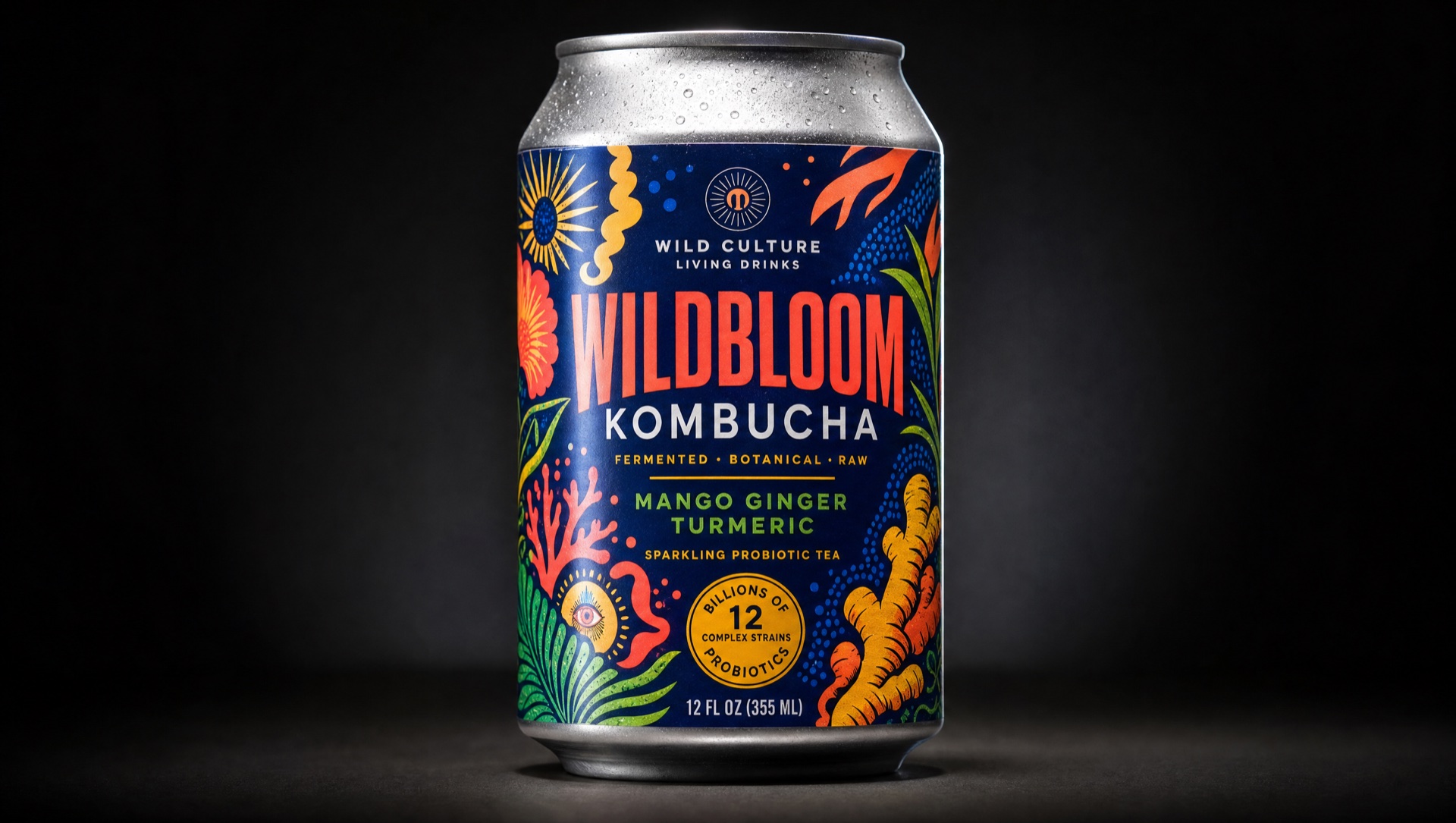
Pressure-sensitive labels are the format that won the CPG shelf. Cut, peel, apply — the same workflow on a 50-bottle hand-applied artisan run as on a 200,000-unit automated production line. PS labels handle nearly any substrate (glass, plastic, metal, paper bottle), nearly any shape (round, square, complex die-cut), and nearly any embellishment (cold foil, soft-touch laminate, spot varnish, textured uncoated). The flexibility is exactly why they're our most-printed product. The hard part isn't whether to use PS labels — it's getting the substrate, adhesive, finish, and timeline right for what your shelf and supply chain actually demand. That's where most label vendors fall down. We don't.
What pressure-sensitive labels are good for
PS labels are the right call when your packaging is any of these: a curved bottle, a tapered tube, a tub or jar with a flat front, a faceted glass bottle, a paperboard carton with a label window, a flexible pouch with a labeled face panel, a stand-up doypack, a can with a wraparound label, an industrial drum, a personal-care tube, or a kit-package with multiple SKUs. Which is to say — nearly every CPG package format on a U.S. retail shelf.
They're also the right call when you need flexibility: short seasonal runs alongside flagship volume, multiple substrates in the same SKU line (different face stocks for different product variants), variable data for batch codes and serialization, in-line over-laminate for chemical or moisture protection, or split-package labeling for kit assemblies. The PS format absorbs all of that without forcing a process redesign.
Where PS labels aren't the right call: very high-volume single-SKU programs where in-mold or shrink-sleeve economics beat PS at scale, or labels that need to wrap a non-cylindrical container fully (full-wrap shrink does that better). Outside those cases, PS is almost always the right format.
Specs that matter
Substrate library: white BOPP, clear BOPP (the no-label look), matte uncoated paper, soft-touch laminated paper, silver BOPP for foil-effect simulation, textured uncoated stocks for tactile shelf presence, freezer-grade and cold-temp face stocks, polyethylene for chemical resistance, BS5609-rated marine-immersion substrates, and topcoat-protected papers for harsh-environment products. We match adhesive to substrate to container chemistry — not by guess, by tested combination.
Embellishments: cold foil (a real foil effect without hot foil stamping equipment), soft-touch laminate, spot varnish for tactile contrast, in-line over-laminate for protection, die-cut to almost any shape we can plot on the press. We don't run hot foil stamping or deep emboss — see the next section.
Press: digital (HP Indigo) for short runs, fast turnaround, variable data, and 7-color print quality with extended gamut. Flexographic for high-volume flagship runs with cost-per-label economics. We run both, paired strategically so a 5,000-unit short run doesn't pay flagship setup, and a 200,000-unit flagship doesn't bottleneck behind short-run press loading.
Color: Pantone-accurate matching, spectrophotometer-verified at the press, run-to-run consistent. Variable data for batch codes, expiration, lot tracking, sequential serialization. 4–7 business days digital, 6–10 flexo. Quotes within 4 business hours of complete specs. A decision-maker picks up the phone.
What we don't do on pressure-sensitive labels
Two things, both deliberate. Hot foil stamping — the traditional die-and-heat process that produces the deep metallic effect on fine-wine and prestige-spirits labels. Deep emboss or deboss — the tactile raised or recessed surface treatment that gives a luxury cosmetics or premium spirit label its three-dimensional feel. Both require equipment we haven't invested in.
What we do instead: cold foil for metallic accents (different process, same visual register, faster turnaround, lower cost at our volume); silver BOPP substrates for foil-effect simulation; spot varnish for tactile contrast between elements; soft-touch laminate for a velvet hand-feel that mass-market beauty brands have adopted at scale. For the SMB-to-mid-market CPG buyer, those embellishments cover most of what hot foil and emboss would cover — at speeds and prices that actually fit the program.
If your brand strategy hinges specifically on hot foil + deep emboss for a luxury fragrance or fine-wine launch, we're not your shop — and we'll tell you that on the quote call. Otherwise, PS labels with our embellishment library cover the rest.
Proof, not promises
A specialty sauce brand was launching a new hot-fill SKU — the same recipe family as their existing product line, but the new variant filled at 185°F instead of the existing 165°F. Their PO referenced the standard substrate-adhesive combo they'd been using for years on the cooler-fill products. Our pre-press team noticed the temperature spec change in the customer's previous reorder email and flagged that the standard adhesive wasn't rated for hot-fill above 175°F — it would soften, slide, and curl during cooling.
One phone call, problem caught. The customer's production manager confirmed the new fill temp was correct, our team specified the appropriate hot-fill-rated adhesive substrate, and the job ran on the correct combo the same week. A retail run with curling labels that would have been rejected at the retailer dock never happened.
That's the kind of catch that happens when account continuity is real and substrate decisions get tracked, not assumed.
Working rhythm
A typical PS label program with us. Discovery call to understand your packaging types, substrate preferences, embellishment requirements, application method (hand-applied versus automated), fill conditions (hot fill, cold fill, refrigerated), and reorder cadence. First-job quote returned within 4 business hours of complete specs. Pre-press review with human eyes on every label — substrate-adhesive validation against container and fill conditions, color separation review, die-line confirmation, embellishment proofing. Digital production for short runs and seasonal launches, flexo for steady flagship volume. The same account team stays on your program from order #1 forward.
No call center. No ticket queue. No "let me check with the team and circle back."
// READY TO PRINT
Need pressure-sensitive labels for your product line?
One call. Consider it done.