// PRODUCT
In-Mold labels
Looks like part of the container — built for high-volume CPG packaging.
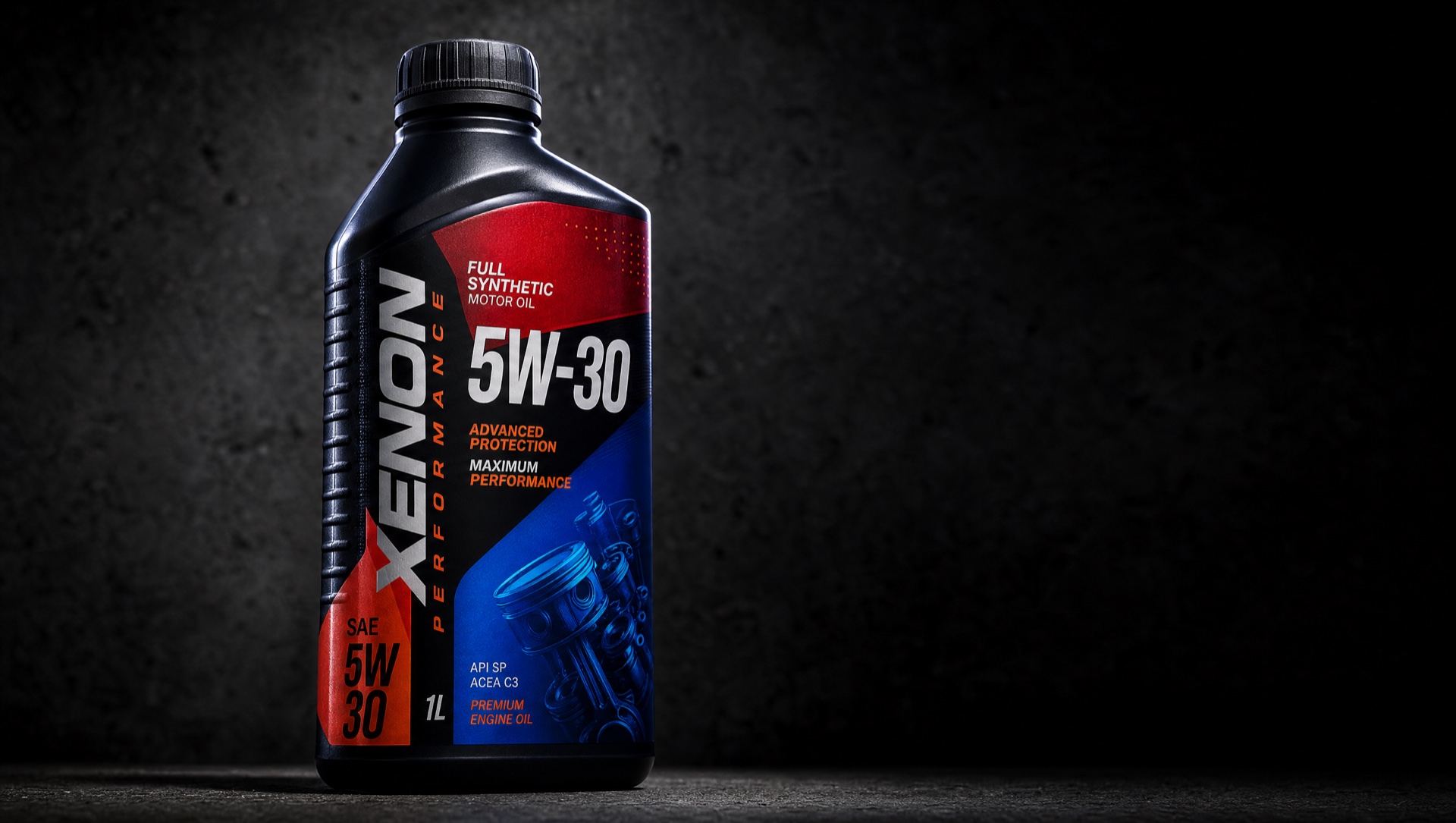
In-mold labeling (IML) isn't a label — it's a printed shell that becomes part of the container during the plastic-molding process. A pre-printed IML label is placed inside the mold, molten polypropylene flows around it, and the label fuses into the container wall as the part cools. The result: no edge to peel, no wrinkles, no separate application step, no adhesive failure under stress, and a 360-degree continuous brand surface that looks engineered, not stuck on. IML is the right call when the container is going to live a hard life (buckets, motor oil bottles, paint cans, large food tubs, industrial chemical containers), when you want the highest possible brand surface continuity, or when you want to eliminate the secondary labeling step from your packaging line. It's also one of the more technically demanding label formats to do well — substrate match to the molded plastic, color rendering at the print, mold-side registration, and post-mold finish all have to land right. Most label printers skip IML entirely. We do it.
When IML is the right call
IML is the right call when the container is doing as much brand work as the printed surface. Five-gallon buckets for paint, industrial coatings, or specialty cleaning chemicals. Motor oil and lubricant bottles where the container survives garage abuse for the product's full use period. Large food tubs for ice cream, yogurt, hummus, or specialty grocery. Quart and gallon containers for household chemicals, automotive fluids, or large-format consumer goods. Pet food canisters in the 12-pound-plus size range. In every case, the container has to read as brand on first sight and hold that read through abrasion, UV, temperature swings, and abuse.
IML is also the right call when you want to remove the secondary labeling step from your packaging line economics. A PS label on a 5-gallon bucket requires a labeler arm, a labeled SKU station, and a quality inspection step. IML eliminates all three — the labeled container comes out of the mold ready to fill. For high-volume programs, that removes a step from the line.
IML is also the right call when you want a recyclable mono-material container — because the label is the same polymer as the container, the whole package recycles together in a polypropylene stream. State-level packaging recyclability rules increasingly favor this structure.
Where IML isn't the right call: small containers where IML setup cost doesn't amortize over the run; very short runs where digital PS labels are more economical; containers that need to be unlabeled mid-production (a flexibility PS labels offer that IML doesn't).
IML specs that matter
Substrate match: IML labels are printed on polypropylene film that matches the polymer of the molded container, so the label fuses cleanly during cooling. We coordinate with your container manufacturer's mold spec to get the right film thickness, surface treatment, and shrink characteristic for the molding cycle they run. Get this wrong and the label warps during cooling, the colors shift, or the label delaminates from the container wall. Get it right and the container looks engineered.
Print quality: full-color digital photographic reproduction on the IML film, Pantone-accurate color matching, spectrophotometer-verified at the press, run-to-run consistent. The print is on the inside surface of the film (facing the molten plastic), which protects it from abrasion, UV, and chemical exposure for the life of the container. This is part of why IML containers survive harsh use without label degradation.
Format work: front-and-back panels for cylindrical containers, single-piece labels for rectangular tubs, multi-panel wrap labels for complex container geometries. We coordinate die-line and panel positioning with the container manufacturer's mold so the label registers correctly during placement and shows no parting-line visible mismatch when the molded part is finished.
Lead time: IML typically runs three to four weeks for production cycles because we coordinate with your container manufacturer's mold and labeling robot timing. Quotes within 4 business hours of complete specs. The longer total cycle is the trade-off for IML's brand-and-economics benefits at high volume.
What we don't do on IML
Blow-molded IML for blow-molded HDPE containers — a separate IML variant from the injection-molded version we run. Different process, different press setup, different substrate. If your container manufacturer is blow molding rather than injection molding, we'd flag that early in the discovery call and refer you to a partner who specializes in that variant. Hot foil stamping or deep emboss on IML faces — the molding process and inside-printed structure don't pair with these decorative effects. Containers smaller than approximately 8 ounces — the per-unit setup cost on IML doesn't amortize well below that size, and PS labels are more economical.
What we do instead on the IML face: cold foil effects, spot varnish where the IML film structure supports it, soft-touch laminate options, and high-quality digital photographic reproduction. For most rigid-container CPG applications where IML makes economic sense, this covers the visual register the category needs.
That's a fit if you're a household chemical, automotive fluids, paint and coatings, large-format food (ice cream, hummus, yogurt tubs), pet food canister, or industrial container brand serving SMB to mid-market volumes through grocery, club, mass, hardware, or industrial channels with high-volume rigid plastic packaging. It's not a fit if you need blow-molded IML or have small-container applications better served by PS labels.
Working rhythm
A typical IML program with us. Discovery call to understand container types, container manufacturer relationship, mold specs, run volumes, and reorder cadence. We'll loop in your container manufacturer's mold engineer for the spec confirmation — IML can't be designed in a vacuum. First-job quote returned within 4 business hours of complete specs, mold spec included. Pre-press review with human eyes on every label — film thickness against the mold spec, registration alignment, color separation review, panel positioning against the parting line. Production digital or flexo per run volume. Coordinated delivery schedule that synchronizes with your container manufacturer's molding cycle. The same account team stays on your program from order #1 forward, so when you call about Rev 3 of a paint bucket IML we coordinated 18 months ago, we know what mold and substrate you're talking about.
No call center. No ticket queue. No "let me check with the team and circle back."
// READY TO PRINT
Need in-mold labels for your packaging line?
One call. Consider it done.