// INDUSTRY
Pet Product labels
Pet brands grow in pulses. The label program has to keep up.
The Label Shoppe prints labels for pet food, treats, supplements and pet care brands, on adhesives and face stocks chosen for freezer, humidity and daily handling. Quotes come back within 4 business hours of complete specs.
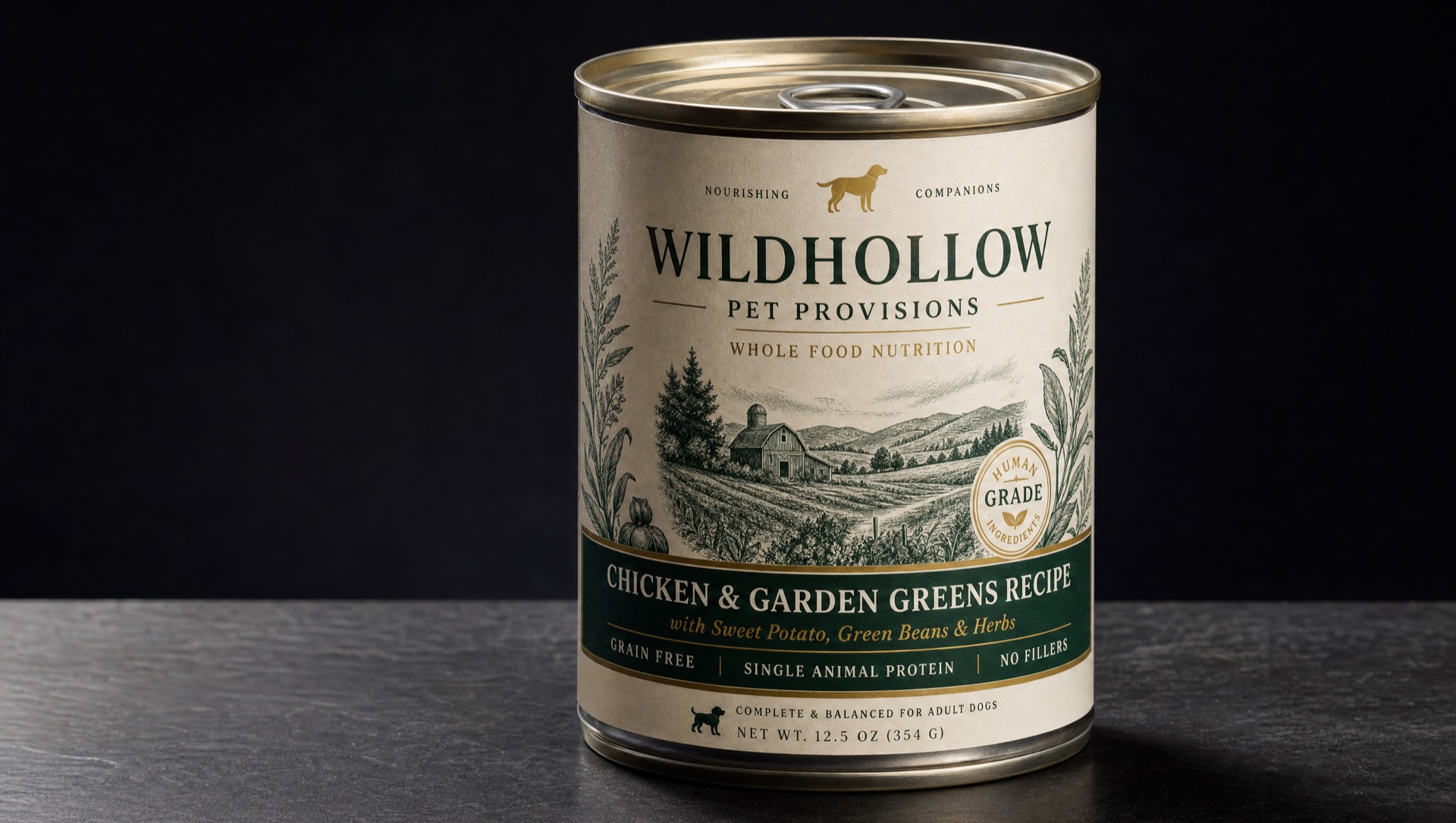
Pet brands grow in pulses. A new SKU lands at PetSmart. Chewy adds you to a category page. A new co-pack relationship doubles your monthly print volume in a quarter. The label vendor that handled your startup-phase 8,000-unit runs isn't always the one that scales to the 80,000-unit runs of your second retail year — and switching mid-growth is a quarter you don't get back. Pet category label work runs on retail-driven velocity, a regulatory floor your team owns, and substrate decisions that have to survive a pet's mouth, paw, and supply-chain abuse.
What we do for pet brands
The pet category has its own substrate physics. A treat bag goes from co-packer freezer to summer warehouse to retail end-cap, where a customer pulls it, squeezes it, and reads the back. A food bottle sits in a pantry next to spilled water, on a counter near a dishwasher, in a bowl that gets licked and shoved. A supplement chew tub gets handled twice daily for months. Standard CPG substrates don't always make it. We've built the program for what does.
Pressure-sensitive labels on aggressive-tack adhesives that hold to recycled rPET, polypropylene canister, glass jar, and HDPE pouch. Cold-temp adhesives for chilled or frozen treats and raw food formats. Moisture-resistant face stocks and laminates for high-humidity packaging environments. Expanded Content Labels (ECL) for multi-panel ingredient lists, AAFCO statements, feeding guidelines, and country-specific copy when a brand exports. Cold foil for metallic accents on grain-free, freeze-dried, or boutique-tier SKUs. Variable data for lot codes, best-by dating, and serialization. Digital and flexo press combination so a 5,000-unit limited-release flavor doesn’t subsidize the 80,000-unit flagship.
A multi-SKU pet brand doesn't need a vendor that re-quotes every order. They need a printer that knows their substrate program, their panel layout convention, and their distributor labeling rhythm — and that catches a feeding-guideline change before it hits the press.
What your label has to carry
Your category has its own rules, and your regulatory team knows them better than we do. Product name and species. Net weight. Guaranteed analysis. Ingredient declaration in descending order. Feeding directions. Manufacturer or distributor name and address. Lot identification. The nutritional adequacy statement.
State-by-state registration adds another layer. Most U.S. states require pet food brands to register every product with their state department of agriculture — and the label has to match the registered product exactly. A small reformulation that changes the guaranteed analysis triggers a re-registration cycle. A label that doesn't match the registered version gets flagged at a retailer compliance audit or a state inspection.
What we bring to it: we have access to materials meeting dozens of different regulatory standards in every industry. And a pre-press review that checks every proof against the spec you approved, with every change between revisions flagged.
What we don't do (and who we're not for)
If your premium pet brand strategy hinges on traditional hot foil stamping, deep emboss/deboss, or prestige-tier shelf decorating, we're not your shop. Those decorative finishes require capital we haven't invested in. We do run cold foil, soft-touch laminate, spot varnish, textured uncoated stocks, and high-quality digital photographic reproduction — most of the visual register premium pet brands actually need.
That's a fit if you're a pet food, treat, supplement, dental, or pet care brand serving SMB to mid-market volumes through pet specialty retail (PetSmart, Petco, Pet Supplies Plus), natural-pet channels (independent specialty), e-commerce-first (Chewy, Amazon, DTC), or grocery and mass cross-over. It's not a fit if you're chasing a luxury-grade decorating effect on a niche premium SKU. We'd rather say so up front than waste your time on a quote call.
Working rhythm
A typical pet brand account looks like this with us. Discovery call to understand your product category mix, retail channel velocity, state-registration footprint, substrate preferences, and approval workflow. First-job quote returned within 4 business hours of complete specs. Pre-press review with human eyes on every label: check against the spec and artwork you approved, with every change between revisions flagged, plus color separation review and die-line confirmation. Digital production for short and seasonal runs, flexo for steady flagship volume. The same account team stays on your program from order #1 forward, so when you call about Rev 5 of a dental chew label we printed nine months ago, we know what you're talking about.
No call center. No ticket queue. No "let me check with the team and circle back."
// READY TO PRINT
Need labels for your pet brand?
One call. Consider it done.